
Having achy muscles all the time can change how a person moves, works, and sleeps. Inomyalgia means your muscles hurt a lot and don’t stop hurting quickly. Many people don’t know what it is. This makes them feel confused and unsure how to get help. Learning about Inomyalgia helps them understand their body and find ways to feel better. Knowing about it is the first step to feeling more in control every day.
Inomyalgia is not a medically recognized disease. It’s a term people use when their muscles hurt a lot for a long time. Fibromyalgia is a real condition that doctors can check and diagnose. People often find Fibromyalgia when searching for Inomyalgia. It is the closest known term for long-term muscle pain.
In simple words, Inomyalgia is how it feels, and Fibromyalgia is what doctors say might be causing it. Knowing the difference helps people understand their pain, feel heard, and talk about it the right way.
Breaking down the full word Fibromyalgia
Fibro : fibrous/connective tissue.
Myo : muscle.
Algia : pain.
The prefix “ino-” in Inomyalgia comes from Greek “inos”, which means “fiber” or “muscle fiber”. So, breaking down Inomyalgia:
Ino : muscle fiber
my : muscle
algia : pain
Essentially, Inomyalgia literally means “pain in the muscle fibers”
Living With Inomyalgia: The Symptoms That Affect Daily Life
Living with Inomyalgia can feel like carrying a heavy invisible backpack all the time. It’s not just normal achy muscles, it hurts a lot and keeps hurting, making it harder to move and feel good.
Understanding the Core Symptoms
Many people report persistent muscle ache disorder, where deep muscular discomfort appears in specific areas. This discomfort can make simple tasks like climbing stairs or picking up something, feel really hard. Sometimes the pain is in the back, shoulders, or legs, and other times it can hurt in lots of places at once.
A notable feature is fatigue, even after resting. This can make it hard to have energy during the day. It can also cause brain fog, making thinking, concentrating, or decision making slow and frustrating.
How Symptoms Affect Daily Activities
Morning stiffness is common, making it difficult to start the day. The inomyalgia symptoms checklist includes:
Tender points.
Difficulty moving.
Sporadic flare-ups that disrupt routines.
These inomyalgia pain locations can vary widely among individuals, This shows that the condition can be different and surprising each time.
Temperature changes or sudden cold exposure can trigger discomfort, highlighting what triggers inomyalgia flare-ups. Even light physical activity may amplify the pain, This often makes people careful when doing exercise or everyday chores.
Emotional Impacts
Beyond physical limitations, living with this condition affects emotional health. The constant muscle ache feels deep and sore, which can make people feel frustrated, irritability, or want to be alone sometimes. Since everyone feels it differently, it’s important for family, friends, and coworkers to understand and be patient.
Patients often report that the pain is muscular and tangible, unlike the nerve based or tender-point pain seen in other chronic conditions.
Sleep disturbances are also frequent, This can make tiredness and trouble thinking even worse. Documenting these issues in an inomyalgia symptom tracker tool can help identify patterns and provide helpful information for healthcare providers.
Inomyalgia Causes Most People Never Think About
When people ask what is inomyalgia, they often expect a single, clear cause. In reality, the condition develops quietly through a mix of overlooked physical, neurological, and lifestyle factors. Understanding these hidden contributors helps explain why the pain can stay even when nothing looks hurt.
How the Body Feels and Understands Pain
Sometimes the body feels pain even when nothing looks hurt. The nerves can make small feelings feel very big. This helps explain why muscles can hurt a lot even when tests look normal. Over time, this can turn into pain that stays for a long time.
Changes Inside the Muscles
Inside the muscles, using them too much can slowly change how they work. This is why even small actions can feel very tiring. It’s not from getting hurt all at once, the pain builds up little by little and can stay even after the first problem is gone.
Lifestyle Factors
Many people overlook everyday habits. Poor posture, limited movement, and long hours of sitting can restrict blood flow, increasing stiffness and soreness. These patterns often contribute to muscle fatigue and pain, especially when combined with emotional stress. Over time, this cycle may explain why muscles hurt in inomyalgia even during rest.
Stress, Hormones, and Energy Imbalance
Feeling stressed all the time can make muscles stay tight and hurt more. Changes in the body’s hormones can also make the pain last longer. These things can cause or make Inomyalgia worse, but people don’t always notice them at first.
Sleep and Recovery Disruptions
Sleep helps muscles fix or repair themselves. If rest is not deep or gets interrupted, muscles don’t heal properly. This can make soreness worse and make you feel extra tired during the day. Without good sleep, the body stays stuck feeling pain and low energy.
Why people often don’t notice these causes
Because symptoms develop slowly and fluctuate, many triggers go unnoticed. Pain may appear without injury, and tests may look normal. This makes it hard to see why muscles fatigue.
Knowing these hidden causes helps people understand the pain and find better ways to take care of their whole body, not just the sore muscles.
Diagnosis-Treatment Options That Support Real Healing
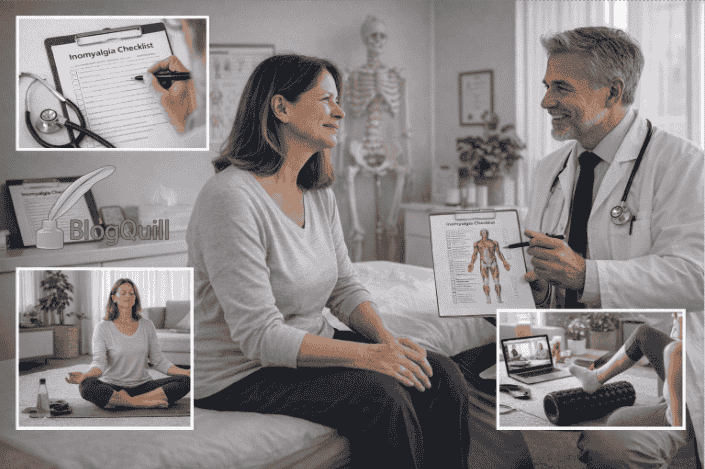
Diagnosing inomyalgia can be challenging because there is no single laboratory test. octors usually check your body, ask about your health, and look at where your muscles hurt. They also make sure it isn’t something else, like arthritis. Using checklists or keeping track of symptoms can help doctors understand the pain better.
Using tools like an inomyalgia diagnosis checklist PDF or symptom tracking can make the assessment more accurate and personalised.
Getting help from doctors who know about Inomyalgia is very important. Talking to specialists in person or online helps make a plan just for you. Using doctors’ advice, healthy habits, and helpful tools can make the pain easier and life better.
How to Reduce Inomyalgia Pain Before It Begins
Stopping pain starts by knowing how your body feels each day. Little habits done again and again can slowly make muscles hurt. Learning what makes the pain worse helps people act early, before it turns into a big problem.
One good way to help muscles is to move gently and not do too much. Easy exercises help blood flow and keep muscles from getting too sore. Using stretchy bands helps muscles stay strong without hurting them.
How you sit and move every day matters a lot. Sitting too long or doing the same thing again and again can make muscles sore. Sitting in a comfy, healthy way helps spread the work so muscles don’t hurt as much.
Eating healthy food, drinking water, and resting help muscles fix themselves. Vitamins and good sleep make muscles less stiff. When you do these things, small aches don’t turn into big pain.
Feeling stressed can make the body tight and tired. Calm breathing, easy stretches, or gentle yoga can help the body relax before pain starts.
Finally, Doing a little bit every day is better than doing too much at once. Staying active in a gentle way helps keep muscles healthy. When small problems are fixed early, pain is less likely to become part of every day.
Healing Your Body and Heart
True healing goes beyond easing physical discomfort. It also involves restoring emotional balance and self-trust. Living with ongoing muscle pain can quietly reshape confidence, relationships, and daily motivation. Recognising this connection helps recovery address both strength and sensitivity.
Moving gently and often helps the body feel better without hurting it. Easy movements help calm pain and make people feel safe using their bodies again. Stretching tools or soft rollers can help muscles relax instead of making them sore.
Eating healthy foods helps muscles heal and keeps you calm inside. Some people use special foods or natural remedies to help sore muscles, focusing on staying healthy instead of quick fixes.
Feeling better also comes from talking to others. Joining online groups or programs helps people know they are not alone. Some follow special exercise plans or virtual therapy to feel safe and guided.
Rest is important too. Quiet time, deep breathing, or creative activities can help the mind feel lighter.
Taking care of both your body and feelings helps you get stronger, be patient with yourself, and trust that you can feel better over time.
What Science Is Learning About Persistent Muscle Pain

Scientists are learning more about why muscle pain like Inomyalgia happens and keeps coming back. They study things like family history, the environment, and daily habits to see how they affect pain. Special scans and muscle tests help explain why muscles hurt so much.
Researchers also look at how sleep, food, and stress make muscle pain better or worse. This helps them find new ways to prevent pain and help people feel better every day. By studying both the body and the science behind it, they hope to make it easier to understand, diagnose, and treat muscle pain so people can feel stronger and happier.
Misunderstandings Among People
Many people don’t understand what it’s like to live with Inomyalgia, so they get some things wrong. Some think it only happens to certain people or is all in the mind, but the pain is very real. Others don’t realize that Inomyalgia can make people very tired or make thinking and decisions harder.
Because the pain can’t always be seen, some people might think someone is exaggerating or avoiding work. They might also think medicine is the only way to feel better, but things like massage, gentle exercise, and healthy habits help too.
Learning about Inomyalgia and talking kindly about it helps everyone understand. Knowing what causes it, what makes it worse, and where it hurts can help friends, family, and communities support people and make life a little easier.
Conclusion
Inomyalgia is when your muscles hurt a lot, and it can make you tired, fussy, or forget things. It doesn’t just hurt your body, it can make your brain feel tired too.
Noticing the pain early and learning why it happens can help you feel better. Seeing doctors, doing gentle exercises, eating healthy food, and learning ways to relax can all help. Using things like special rollers for sore muscles or a comfy desk can make daily life easier.
It’s also important to take care of your feelings. Talking to friends, joining groups, or sharing how you feel can make you stronger.
Even though it can be hard, paying attention to your body, getting help, and taking care of yourself can make life more comfortable and fun.
